

lace frontals
All You Need To Know About Hair Frontals And Closures
The 60 Seconds Answer
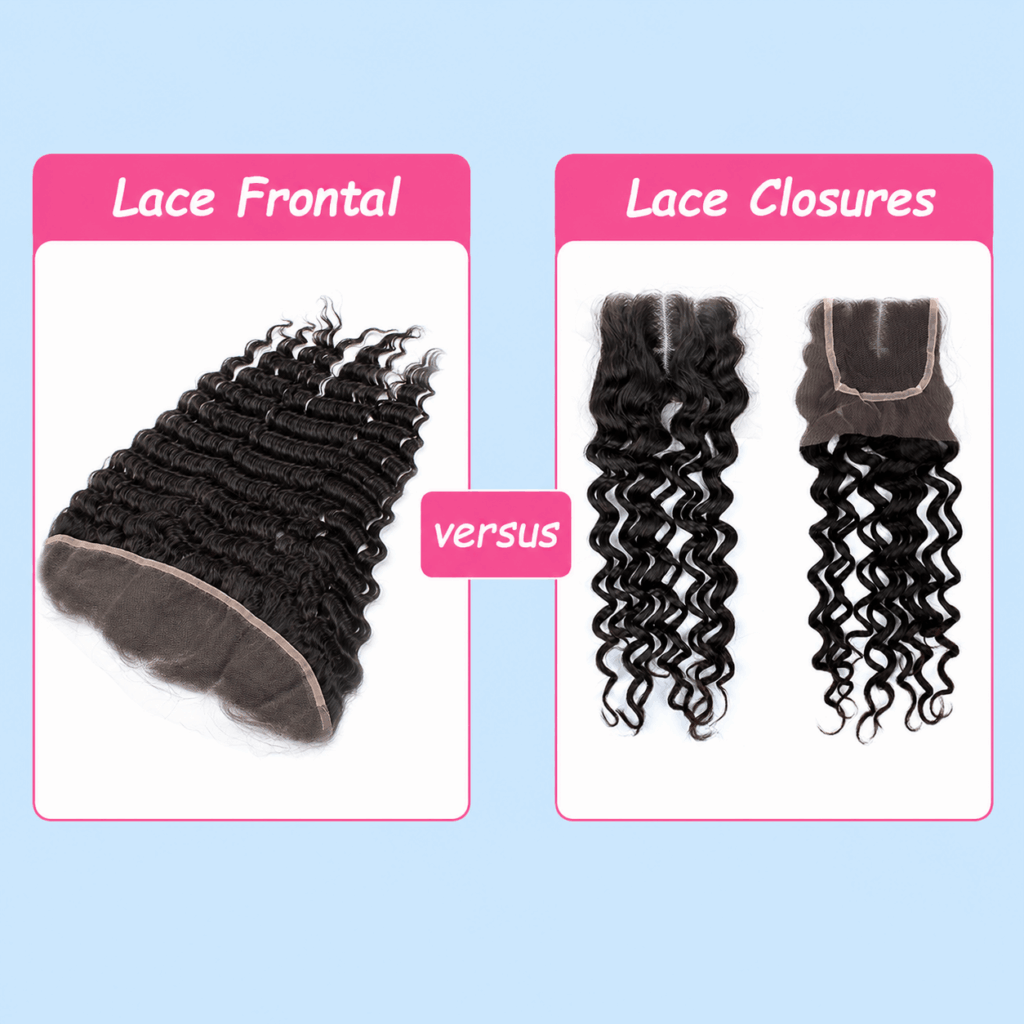
Frontals and closures are hairpieces used to cover your natural hairline. A frontal covers the whole front of your head, from ear to ear, while a closure typically covers just the crown. Both are used for wigs or sew-ins to create a natural look. They protect your natural hair and can be styled to match different hair textures.
What Is A Lace Frontal?
Lace frontals are hair extensions made of lace material that covers the front part of the head. Lace frontals are usually attached with glue or tape. They are a popular choice of hair extensions for those who want to wear their hair in a protective style or for those who want to add some length or fullness to their hair. Lace frontals can be made from real human hair or synthetic fibers.
Closures
Closures are another type of hair extension that can be used to achieve fuller, longer-looking locks. Unlike lace frontals, closures only cover the crown area of the head. Closures are usually made from lace material or silk material, and they come in both human and synthetic varieties. Some of them are also made with baby hairs. Just like with lace frontals, it’s important to find a lace closure that matches your natural hair color and texture.
Lace Frontals vs. Closures
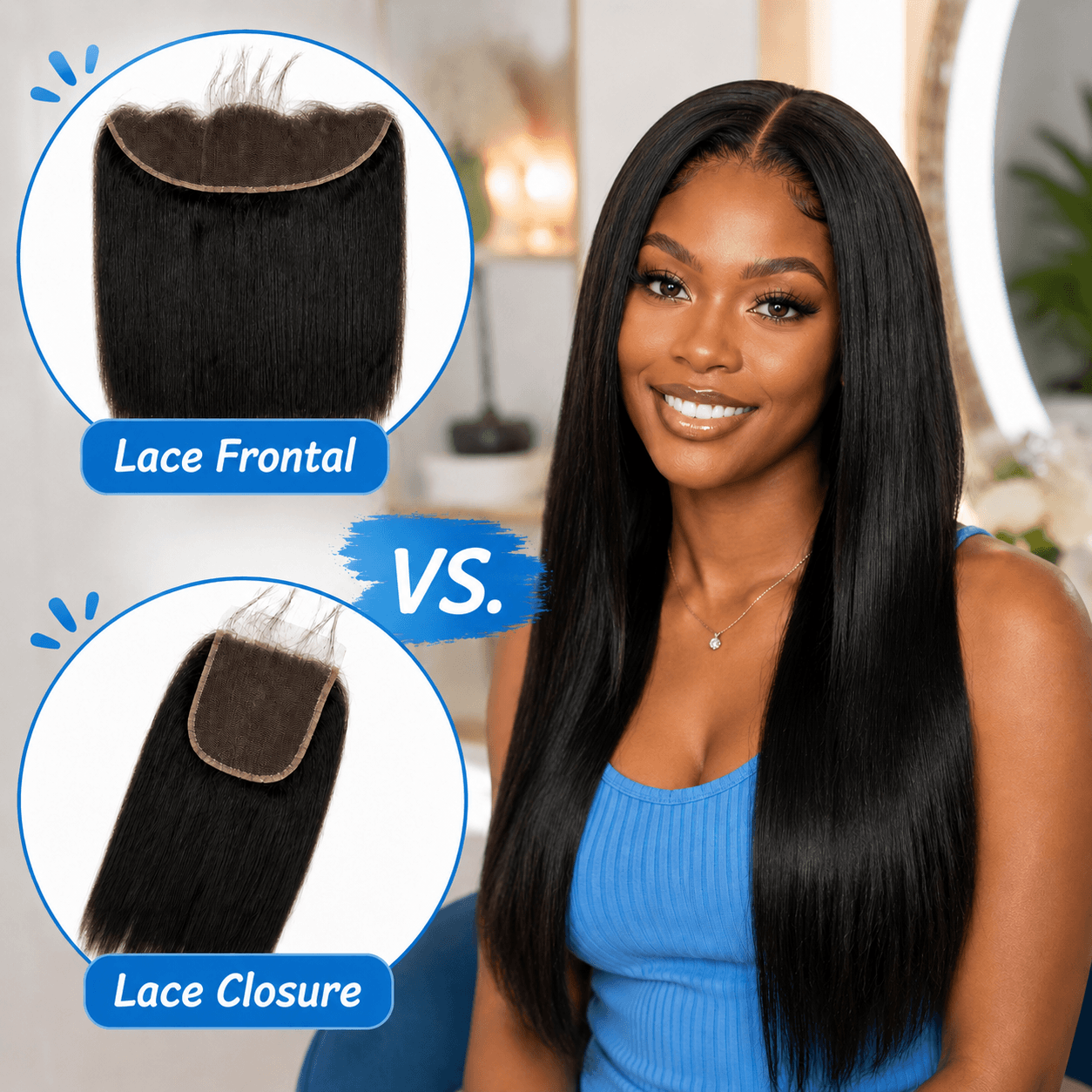
Lace frontals and closures are two popular choices for hairpieces and hair extensions. Lace frontals are hair extensions that cover the entire front hairline, while closures are small pieces of hair that are used to cover up the area where your hair extensions will be attached. Closures can be made from lace, silk, or mesh material, and they are usually attached with glue or tape.
A lace closure is similar to a lace frontal in that it’s a small strip of lace that’s used to create the illusion of natural hair. But there are a few key differences between closures and frontals. First, closures are typically only 3-4″ wide, making them much smaller than frontals.
Second, closures are hair extensions attached to the crown of the head instead of the forehead. And finally, closures can be worn on their own or as part of a wig, but they’re most commonly used in conjunction with weave installations.
Like lace frontals, closures are available in human hair and synthetic options. And they offer a realistic look thanks to their small size and strategic placement at the crown of the head. One advantage that closures have over frontals is that they allow you to style your hair in virtually any way you want without worrying about your hairstyle being disrupted by the adhesive used to attach the frontal.
Comparison of Lace Frontals vs. Lace Closures
| Feature | Lace Frontal | Lace Closure |
|---|---|---|
| Coverage Area | Covers the entire front hairline from ear to ear. | Covers the crown area of the head. |
| Size | Typically larger, extending from ear to ear. | Smaller, usually 3-4 inches wide. |
| Material | Made from lace, available in Swiss, silk, and thin skin. | Made from lace or silk material. |
| Attachment | Attached with glue or tape along the hairline. | Attached with glue or tape, often on the crown. |
| Flexibility | Can be worn with or without adhesive (full lace). | Must be worn with adhesive, only covers the crown area. |
| Use | Provides a natural hairline and styling versatility. | Primarily used to cover the crown area and is smaller. |
| Hair Type | Available in human hair and synthetic. | Available in human hair and synthetic. |
| Baby Hairs | Typically includes baby hairs for a more natural look. | Some closures include baby hairs. |
| Versatility | Offers more styling options like updos, ponytails, etc. | Limited to the crown area but can be styled as desired. |
| Ideal For | Those seeking volume, length, and full coverage. | Those looking to cover the crown with minimal effort. |
| Cost | More expensive due to size and versatility. | More affordable, smaller in size. |
| Lifespan | Can last 4-6 weeks with proper care. | Can last 4-6 weeks with proper care. |
| Protection | Protects the entire hairline from heat and environmental damage. | Offers protection for the natural hairline and the crown area. |
This table highlights the key differences and similarities between Lace Frontals and Lace Closures to help you make a more informed choice based on your styling needs.
When shopping for a lace frontal and lace closure, you’ll also need to decide between a lace or silk base. Lace closures tend to be more affordable than silk closures, but they may not last as long. Silk closures have a more realistic appearance than lace closures, but they are also more expensive. Once you’ve decided on the right type of lace closure for you, it’s time to consult with a professional stylist to have it installed.
So, which one should you choose, a lace frontal or a lace closure? The answer depends on your individual needs and preferences. If you want to create a style with a lot of volume or if you want to protect your entire hairline from heat damage, then a lace frontal is the way to go. However, if you want to create a style with less volume or if you only want to cover a small section of your hairline, then lace closure is the better option.
Types of Lace Frontals for natural hair
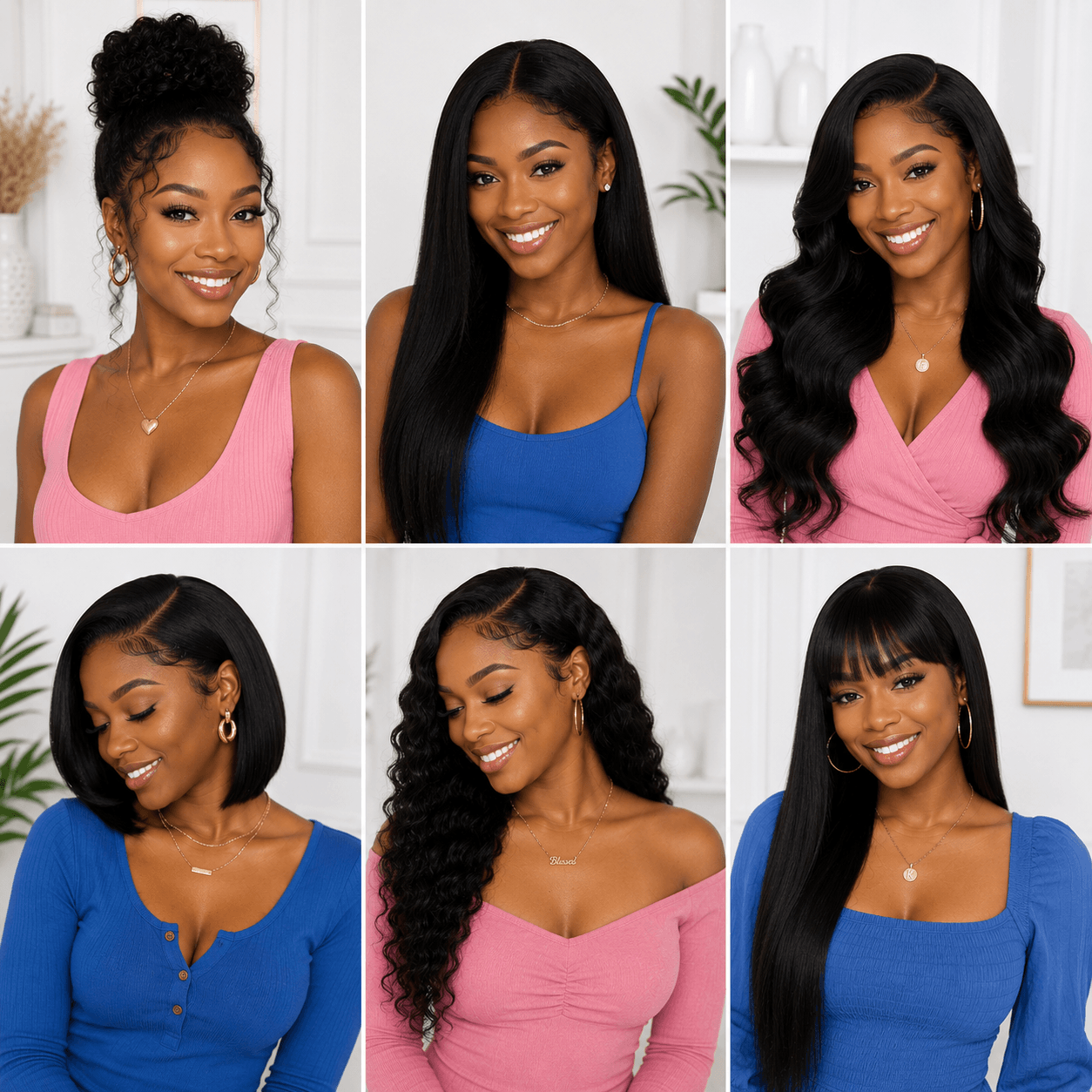
Lace frontals are one of the most popular and versatile hair extensions on the market. They can be used to create a wide range of hairstyles, from sleek and straight to deep wave and voluminous.
There are many different types of lace frontals available, each with its unique benefits. Lace frontals are also made from Indian hair and baby hair. But let’s take a closer look at three of the most popular types of lace fronts: Swiss lace, silk base, and thin skin.
Swiss Lace Fronts Hair Extensions
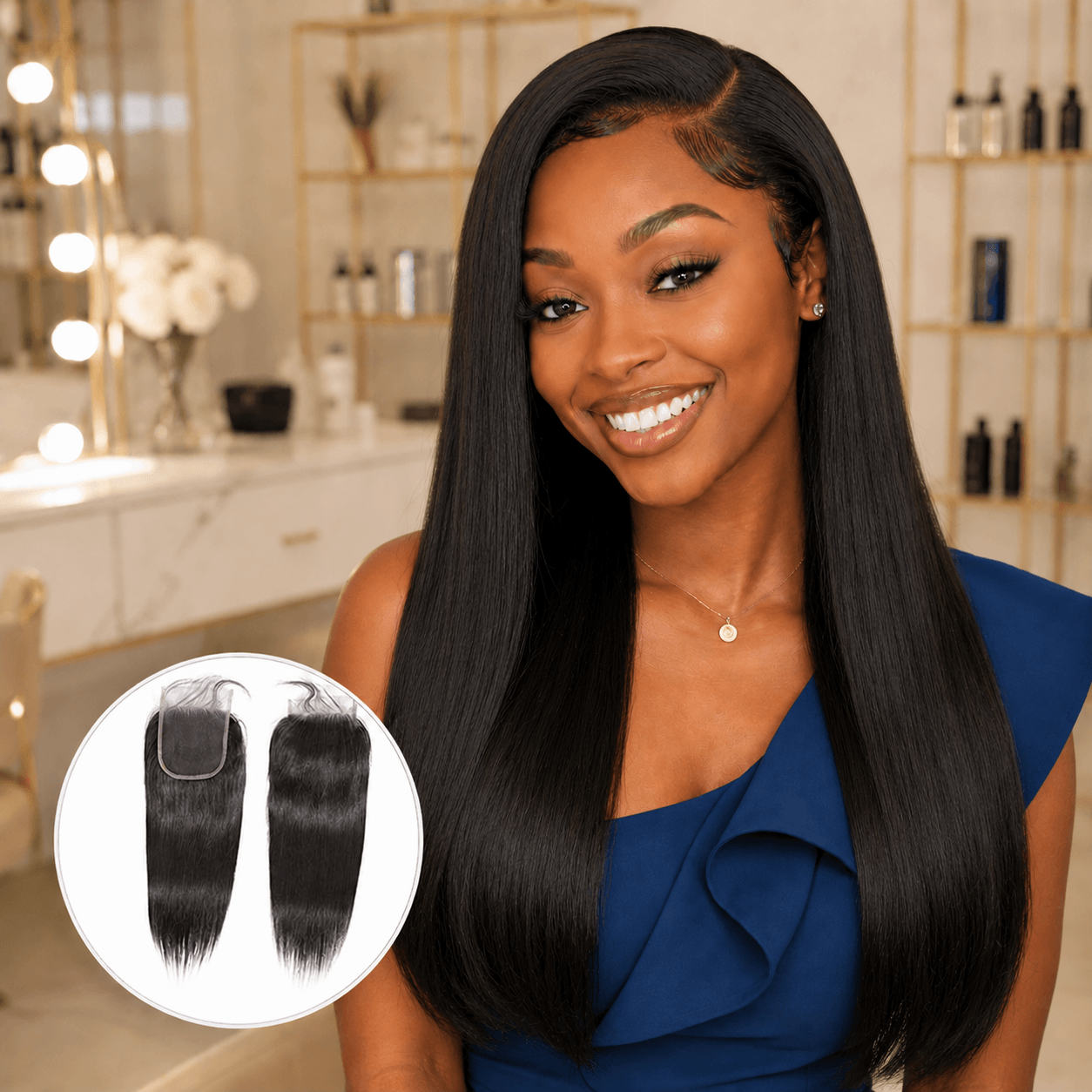
Swiss lace is widely considered to be the highest quality type of lace. It is durable and undetectable, making it the perfect choice for those who want a natural look. Swiss lace is also breathable, which helps to keep your scalp healthy.
Silk Base Fronts
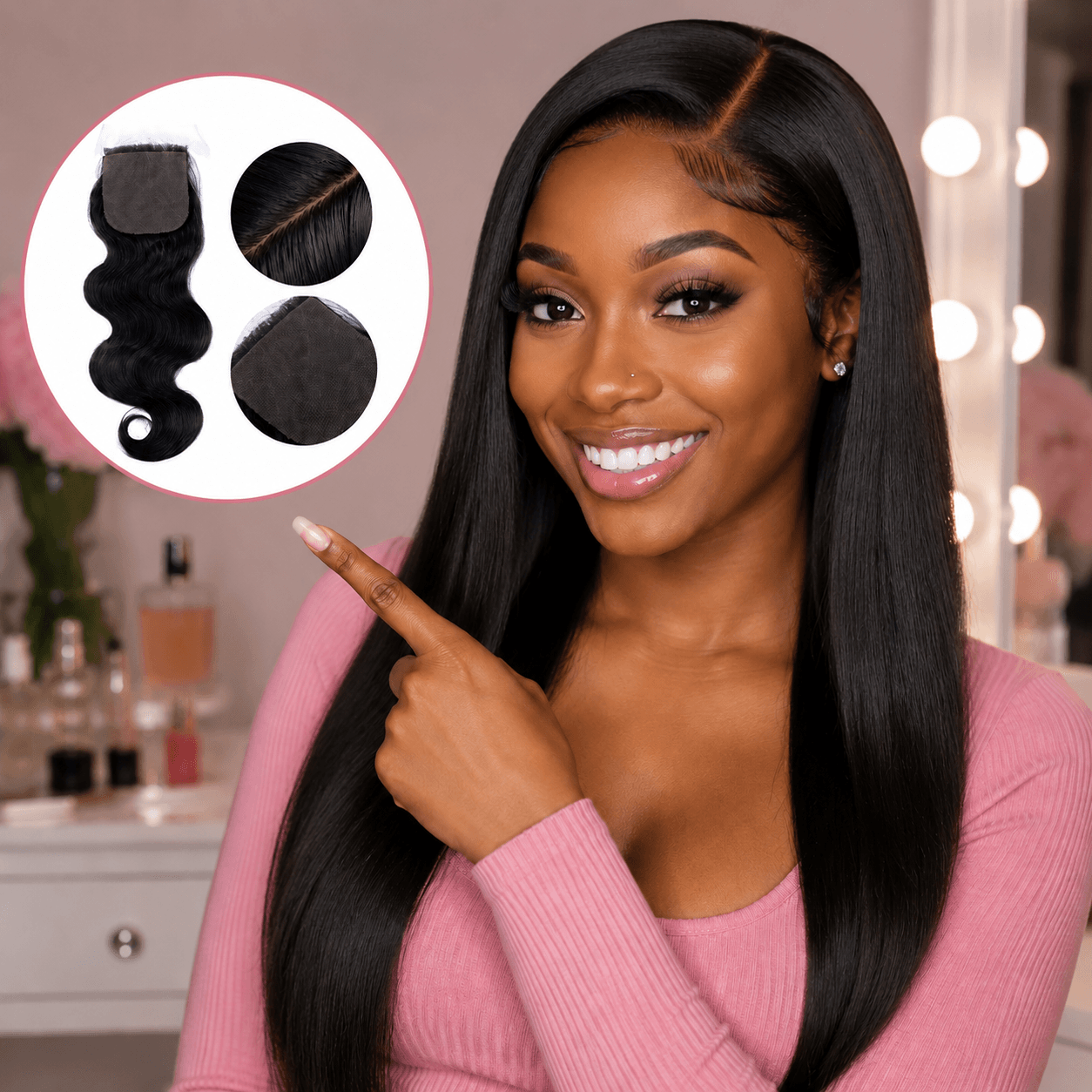
Silk base fronts are made with a thin layer of silk material that helps to create a more realistic appearance. Silk base fronts are often used for hair extensions because they can be styled and parted in any way. The silk material also helps to protect your strands from damage.
Thin Skin Fronts
Thin skin fronts are made with a thin layer of silicone material. They are very durable and offer a lot of protection for your strands. Thin skin fronts are often used for protective styles like braids and cornrows.
Lace Frontals can also be classified into full lace and partial lace frontals
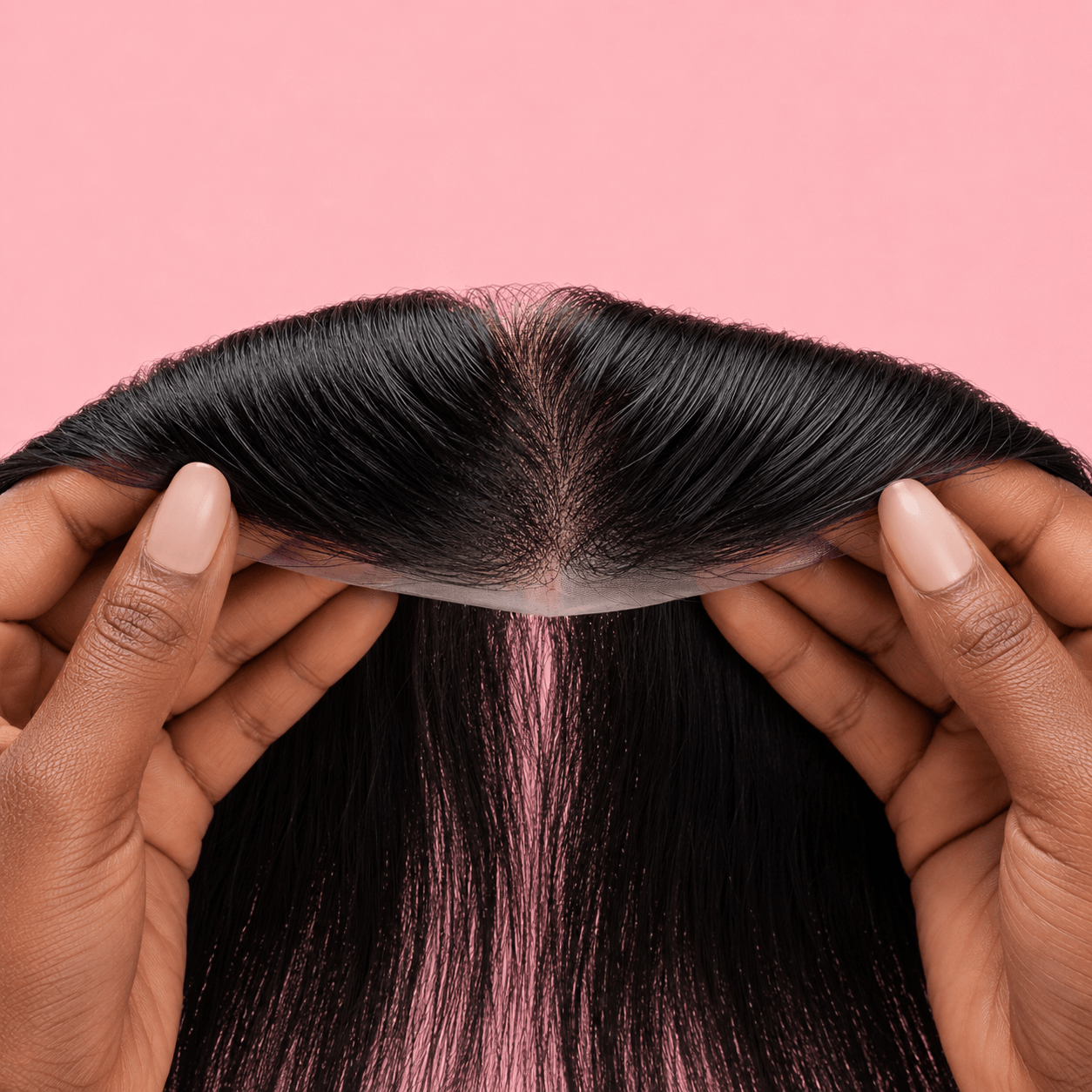
While full lace frontals extend from ear to ear and can be worn with or without adhesive. Particle lace frontals only cover the hairline and must be worn with adhesive.
Full Lace Frontal
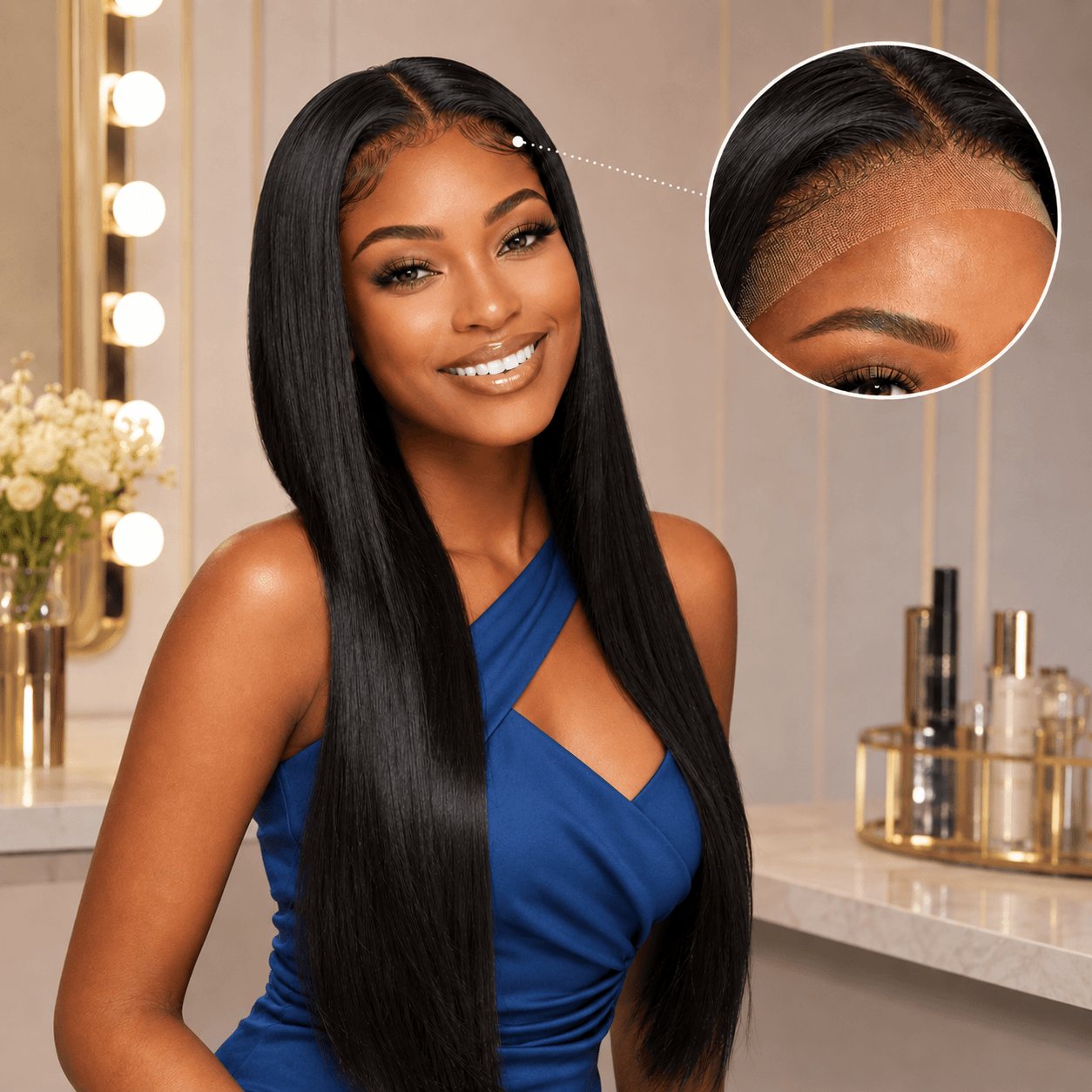
A full lace frontal is a piece of hair that extends from ear to ear and can be worn with or without adhesive. It is made with a delicate lace base that is trimmed to fit your hairline exactly. Full lace frontals are often used to create a hairline with a natural look and can be styled in a variety of ways, including updos and ponytails. Because they offer the most versatile styling options, full lace frontals are the most popular type of frontal on the market today.
Partial Lace Frontal
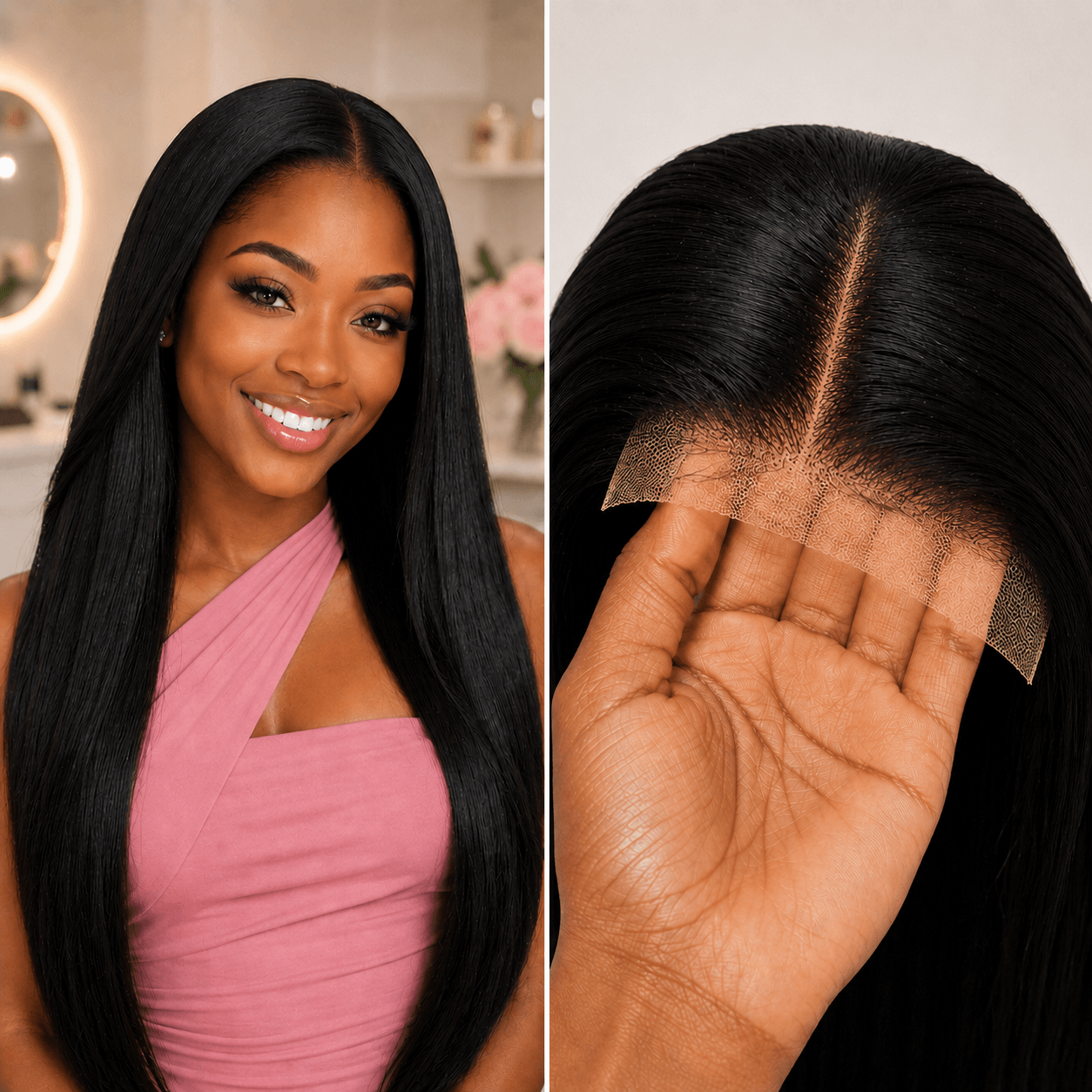
A partial lace frontal is a piece of hair that only covers the hairline and must be worn with adhesive. It is made with a delicate lace base that is trimmed to fit your hairline exactly. Partial lace frontals are hair extensions often used to create a natural-looking hairline but do not offer as much versatility when it comes to styling options.
As for lace closures, the three most common shapes are circular, oval, and rectangular. They come in varying sizes as well such as 4”x4” and 5”x5” being the most popular. Lace closures are also available in different densities such as light, medium, and heavy. Generally, we can categorize lace closures into human hair and synthetic.
Types Of Lace Closure
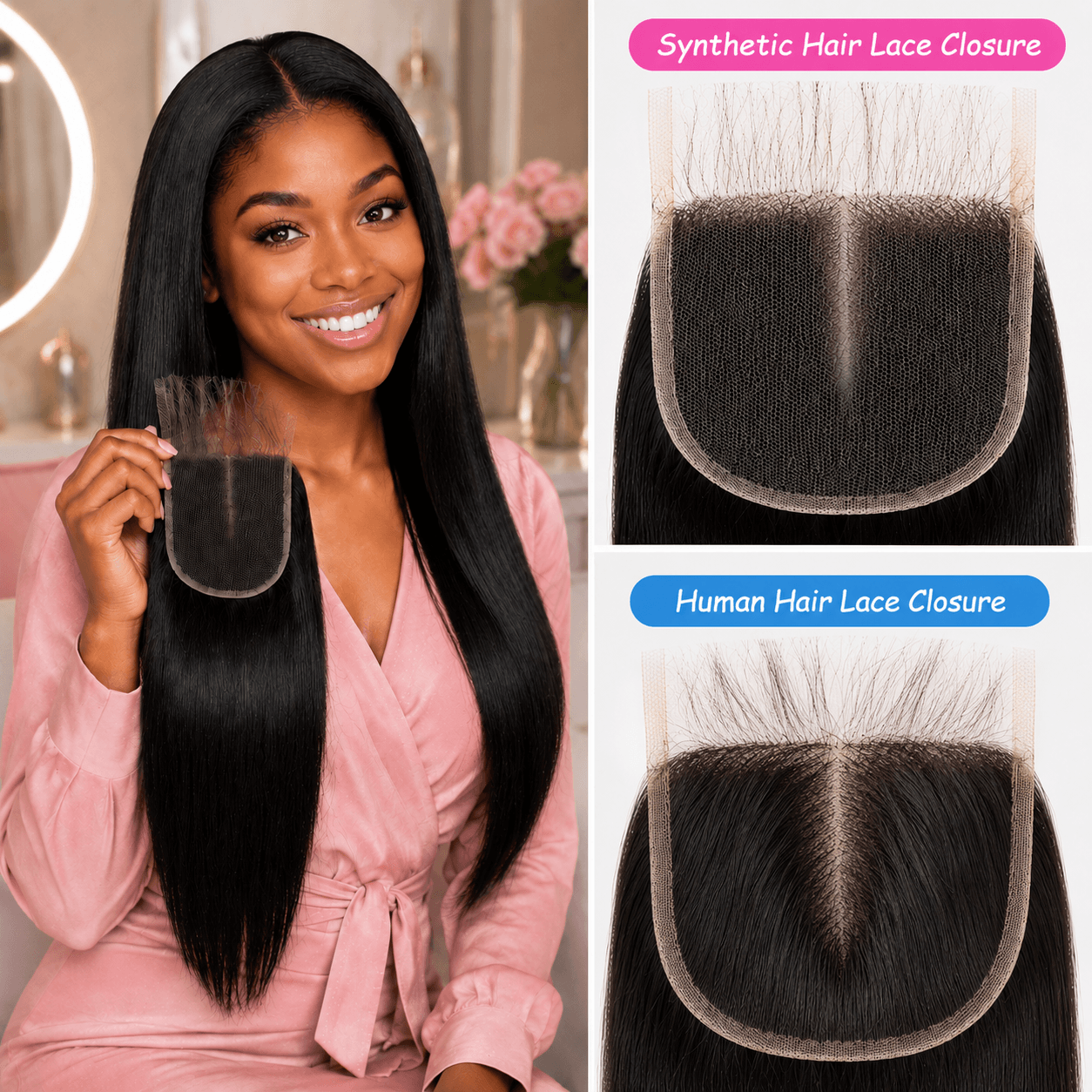
There are two types of lace closures: human hair lace closures, and synthetic hair lace closures. Human hair lace closures will always look more realistic because they can be styled, dyed, and textured just like your own hair.
Therefore, if you want a completely undetectable weave install, then you will want to choose human hair lace closures. Synthetic hair lace closures cannot be styled with heat nor dyed; however, they are much cheaper than human hair lace closures.
Synthetic lace closures will also have a very shiny plastic-like appearance that looks fake and unnatural up close. So if you are on a budget but still want to get that natural look, then you should go for half synthetic/half human hair using both types of lace closures accordingly. But if you have the funds, it’s better to settle for human hair closures.
How Lace Frontals Are Made
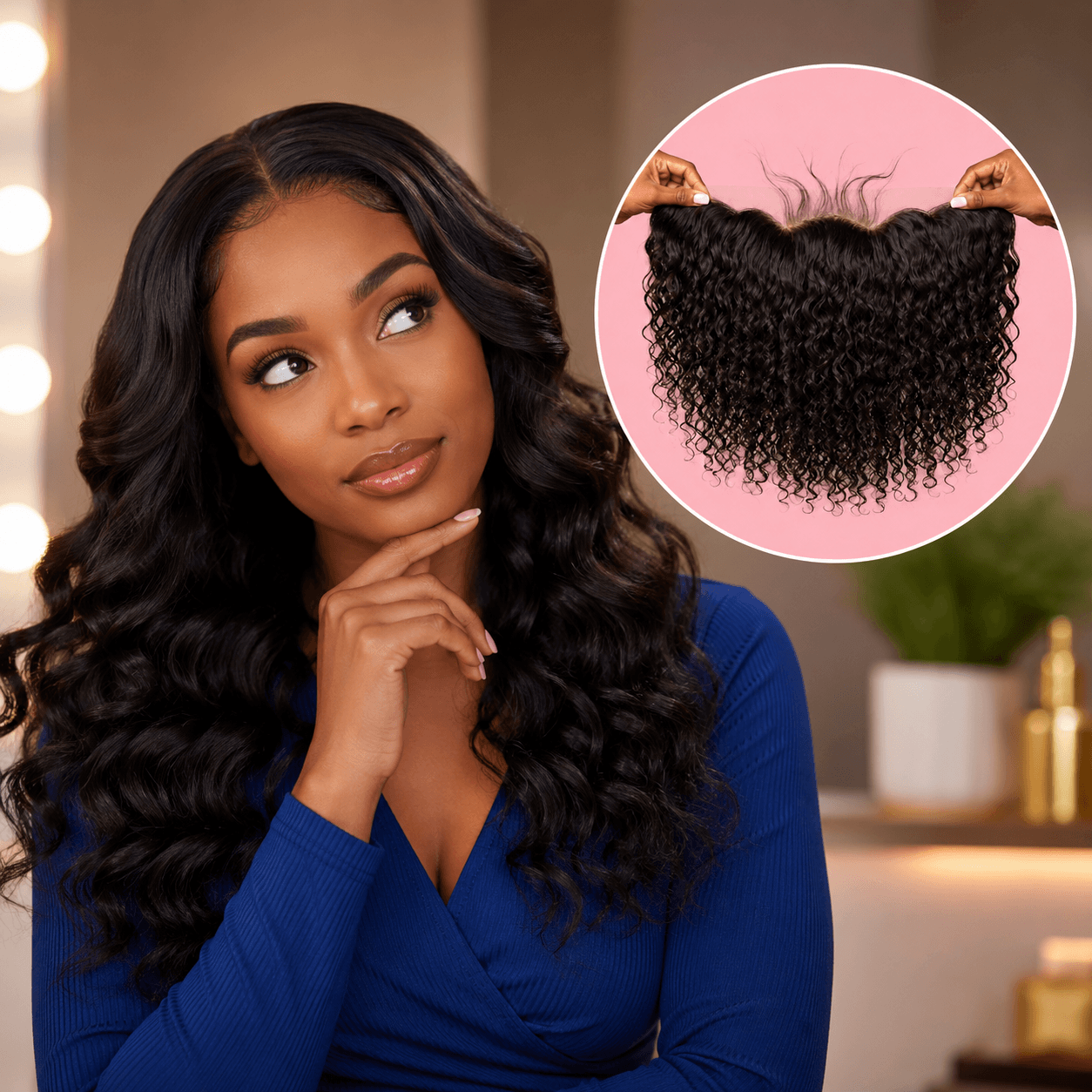
Lace frontals are hair extensions made from a thin, sheer fabric that is hand-tied to a lace base. The base is then attached to the hairline with adhesive. The result is a natural-looking hairline that can be worn with or without a wig cap.
To create the illusion of a fuller, thicker head of hair, lace frontals are usually made with baby hair along the hairline. These baby hairs are carefully trimmed and styled so they blend in seamlessly with your own hair.
Lace frontals can be made in any color or texture to match your existing hair. They can also be custom-colored to create a new look altogether. The sky’s the limit when it comes to styling your lace frontal, so don’t be afraid to experiment!
Why Wear A Lace Frontal?
Lace frontals are a popular choice for those who want to wear their hair in a protective style or for those who want to add some length or fullness to their hair. Protective styles like braids, twists and sew-in hair extensions can damage your natural hair if they are worn for too long. Wearing a lace frontal can help protect your natural hair from damage while still allowing you to wear the style you love.
Lace frontals can also add some length or fullness to your hair. If you have fine, thin hair, a lace frontal can help give the illusion of thicker, fuller hair. If you have short hair, a lace frontal can give you the option of wearing your hair in long styles like braids and ponytails.
How To Attach A Lace Frontal
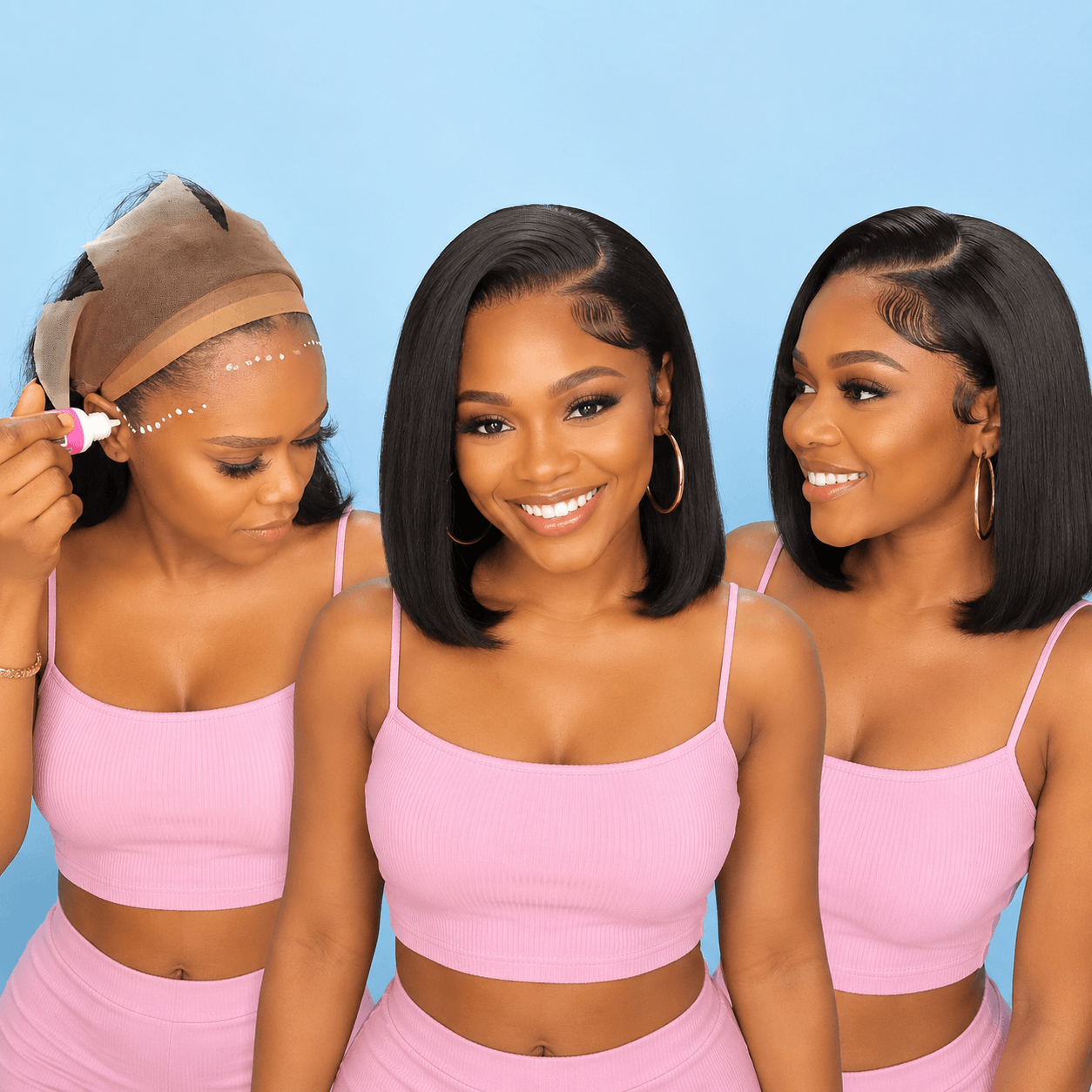
The following are the steps to attach a lace frontal so that it gives you a natural look.
1. Start with clean, dry hair. Before you attach your lace frontal, you’ll want to start with clean, dry hair. This will help the adhesive adhere better and give you a stronger hold. If your hair is oily, you can shampoo it and then allow it to air dry or blow dry it on the low setting.
2. Apply adhesive to the lace frontal. Once your hair is clean and dry, it’s time to apply adhesive to the lace frontal. We recommend using a thin layer of glue so that it doesn’t seep through the lace and onto your skin. Be sure to apply the glue evenly so that there are no bald spots.
3. Attach the lace frontal to your head. Now it’s time to attach the lace frontal to your head. Start by aligning the front edge of the lace with your hairline. Once you have the placement where you want it, gently press down on the rest of the lace so that it adheres evenly.
4. Style as desired. Once your lace frontal is attached, you can style it as desired. You can curl it, flat iron it, or wear it in its natural state. The sky is the limit!
How To Style Lace Frontal
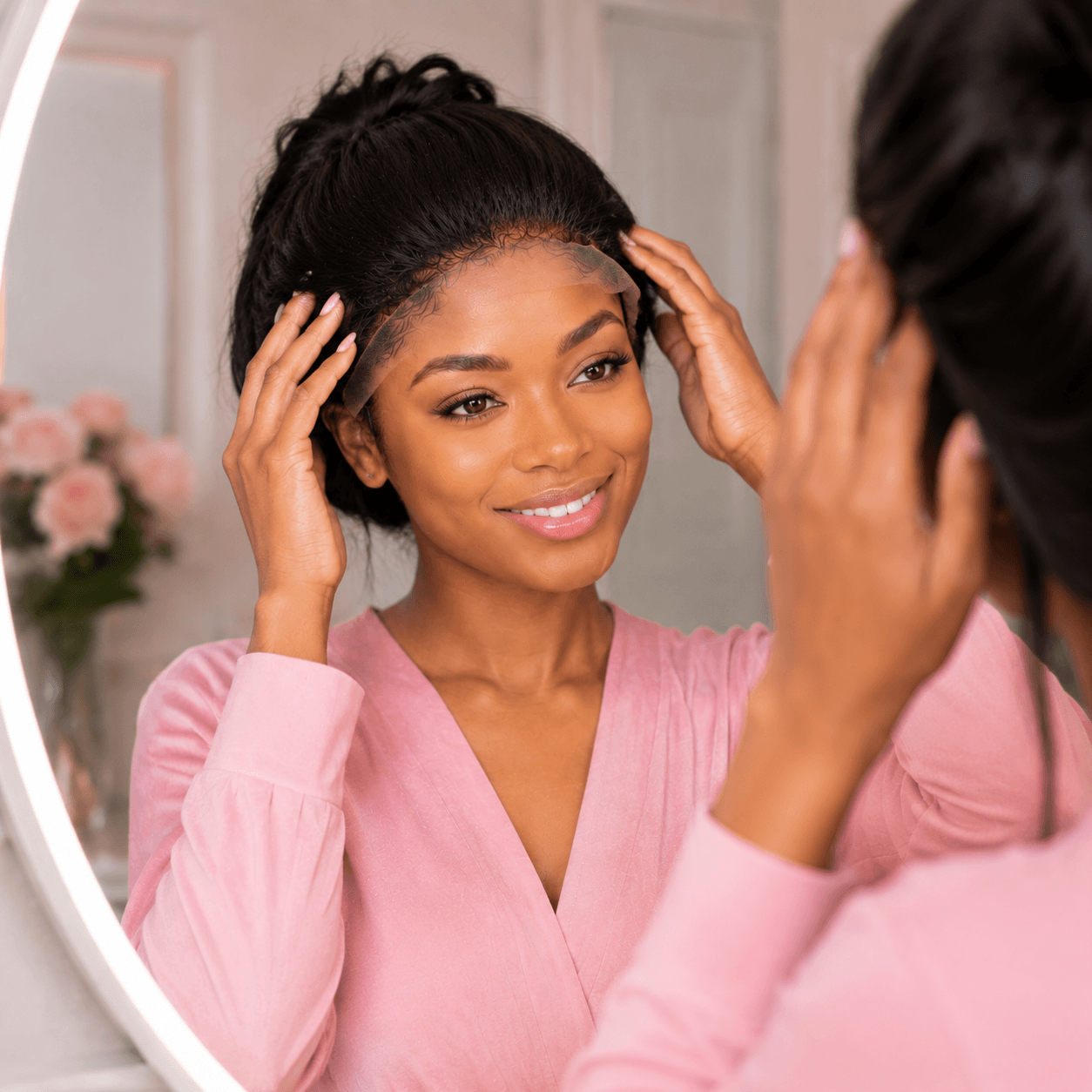
So you have your lac4 frontal but wait! You need to know how to style it first. No worries, we’re here to help. Let’s show you 5 easy tips on how to style your lace frontal wig so that you can look and feel your best. Keep reading to learn more.
Tip #1: Choose the right hairstyle. The first step in styling your lace frontal wig is choosing the right hairstyle. There are many different hairstyles to choose from, so take some time to browse through magazines or online images to find the one that’s right for you. Once you’ve found a few styles you like, ask your stylist for such styles.
Tip #2: Apply heat protectant spray. Before you begin styling your wig with heat tools, it’s important to apply a heat protectant spray. This will help protect your hair from heat damage and will also make it easier to style. To apply the spray, simply hold the can about 6 inches away from your head and evenly mist the hair.
Tip #3: Style as desired. Now that you’ve trimmed the lace and applied heat protectant spray, it’s time to style your wig as desired. This can be done with curling irons, straighteners, or any other type of styling tool you prefer. If you’re not sure how to use a certain tool, there are plenty of instructional videos available online that can help walk you through the process step-by-step.
Tip #4: Set with hairspray. After you’ve styled your wig into position, it’s time to set it with hairspray. This will help keep everything in place and will also help prevent flyaways throughout the day. To apply hairspray, simply hold the can about 8-10 inches away from your head and evenly mist the hair. Allow the hairspray to dry for a few minutes before touching or combing through it.
Benefits Of Using Lace Closures
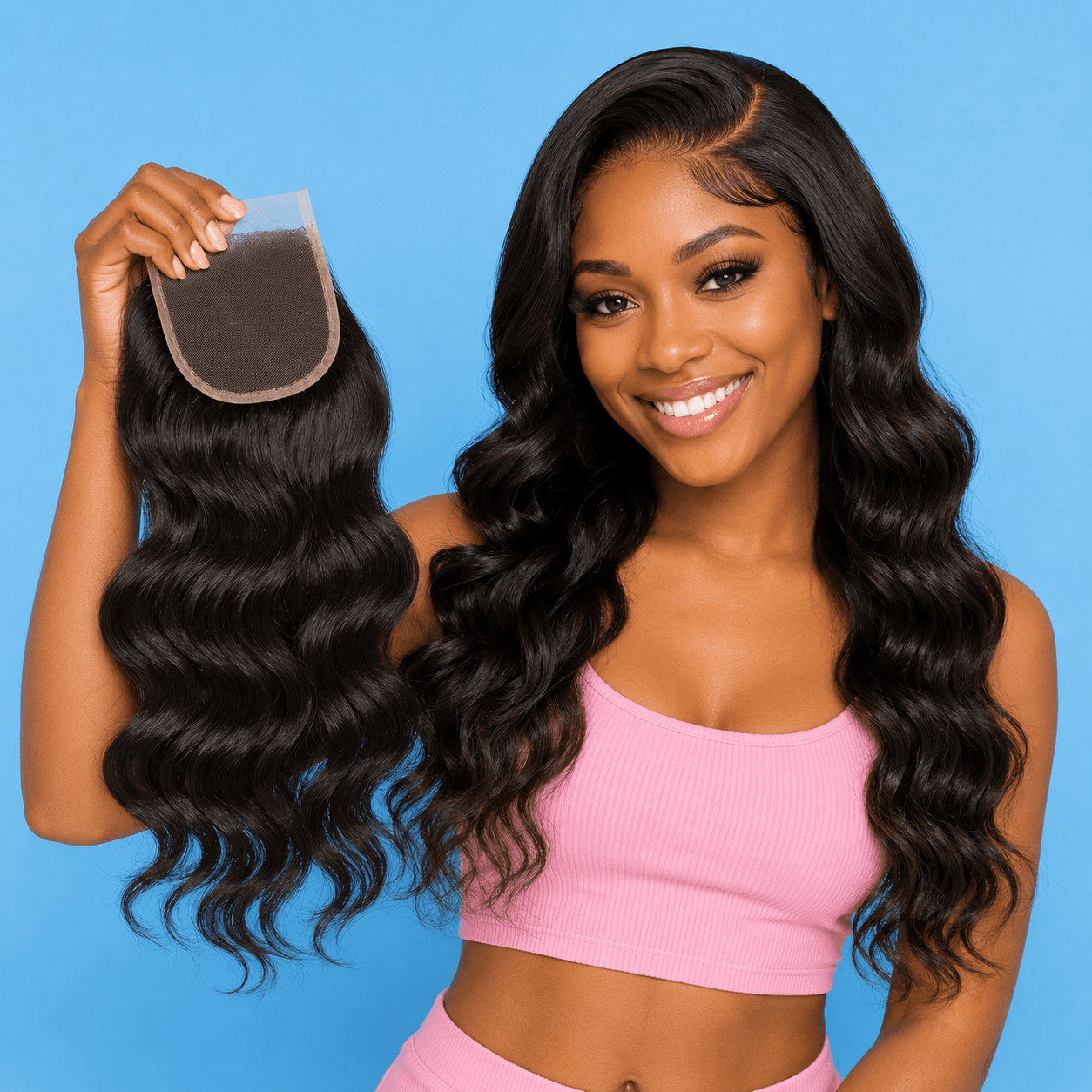
Now that you know a little bit more about what lace closures are and what they do, let’s take a look at some of the benefits of using them:
1. Wide range of styles: One of the great things about lace closures is that they come in a wide range of styles. Whether you’re looking for a straight, wavy, or curly look, there’s sure to be a lace closure that meets your needs. And since the piece is only 4×4 inches, it’s easy to style however you want.
2. Affordable: Compared to other hair extensions, lace closures are relatively affordable. You can find good quality closures for around $100-$150. 3. Long lasting: When properly cared for, a lace closure can last anywhere from 4-6 weeks. And since they do not damage your natural hair, you can reuse them over and over again without worrying about your hair becoming unhealthy or damaged.
4. It gives you a natural look: One of the best things about lace closures is that they blend in seamlessly with your natural hairline. Thanks to the lace material, the closure looks just like real scalp skin, making it impossible to tell that you’re wearing one.
5. Protective style: As we mentioned before, one of the main benefits of using a lace closure is that it offers protection for your natural hair. By covering your hairline with the lace closure, you can avoid exposure to harsh weather conditions and protect your strands from everyday wear and tear, all while still rocking a fabulous hairstyle!
6 If you’re looking for an affordable, long-lasting, and natural-looking way to protect your strands and try out new styles, then a lace closure just might be right for you! Be sure to consult with a professional stylist before making any decisions so that you can find the perfect style for your needs.
How To Care For My Lace Closure And Frontal

Caring for your lace closure starts with proper shampooing and conditioning. Be sure to use a mild shampoo and conditioner that is free of sulfates and harsh chemicals. Gently wash your lace closure in sections, starting at the roots and working your way down to the ends. Avoid rubbing the hair too vigorously as this can cause tangling and frizziness. After shampooing and conditioning, be sure to rinse the hair thoroughly with cool water to remove any residual product.
Next, it is important to moisturize your lace closure properly. Use a quality leave-in conditioner or hair oil to keep the hair hydrated and looking shiny. Apply the product evenly from root to tip, using a wide-tooth comb to distribute it evenly throughout the hair. Avoid using too much product as this can weigh the hair down and cause build-up.
Finally, it is important to protect your lace closure from heat damage. When heat-styling your hair, be sure to use a heat protectant spray or serum before applying any heat. Hold the spray or serum approximately 6 inches away from the hair and apply it evenly throughout.
This will help create a barrier between your hair and the heat, reducing the risk of damage. When finished styling, allow your hair to cool completely before touching or combing it.
What Is A Deep Wave Lace Frontal?
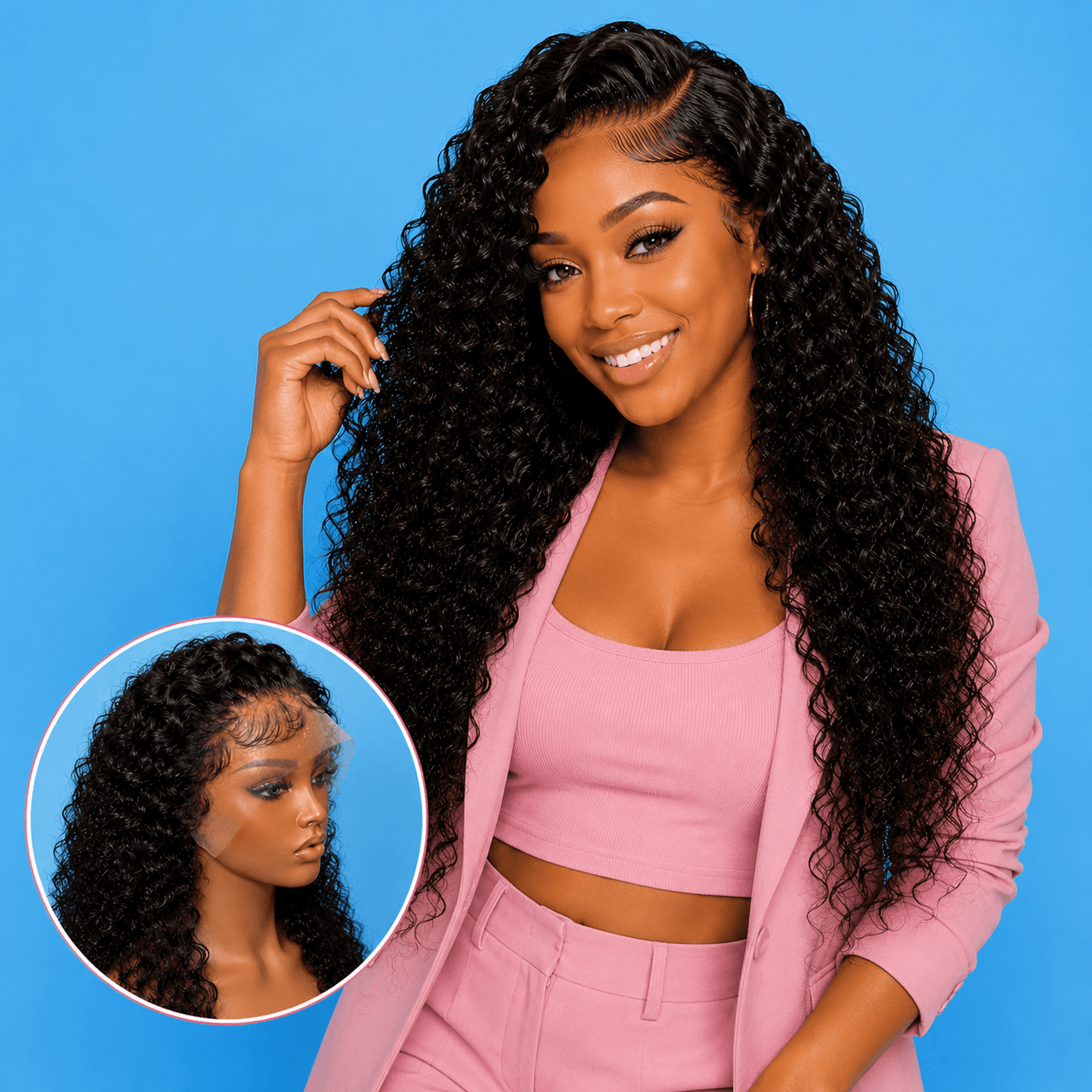
Also called body wave, a deep wave lace frontal is made with human hair that has been treated to create deep waves. The hair is hand-tied to a piece of lace, which is then attached to the front of the head. Body wave Lace frontals can be used to cover up thinning hair or add volume and fullness.
Benefits of Deep Wave Lace Frontals
There are many benefits to choosing a deep wave lace frontal over other types of hairpieces or extensions. First, deep-wave lace frontals are made with human hair, which means they can be styled just like your own hair. You can curl, flat iron, or style them any way you like.
Another benefit of deep-wave lace frontals is that they’re less likely to tangle than other types of hairpieces. This is because the waves help keep the hair in place and prevent it from tangling. Deep wave lace frontals are also less likely to shed than straight or curly pieces.
Lastly, body wave lace frontals provide more coverage than other types of hairpieces. They can be worn in low ponytails or updos without worry that your scalp will be exposed.
Deep wave or body wave lace frontals are a great option if you’re looking for a new hairstyle. They offer many benefits, including the ability to be styled like your own hair, less tangling and shedding, and more coverage than other types of hairpieces. If you’re considering a body lace frontal, be sure to ask your stylist about a deep wave option.
Closures and Frontals for women losing their hair
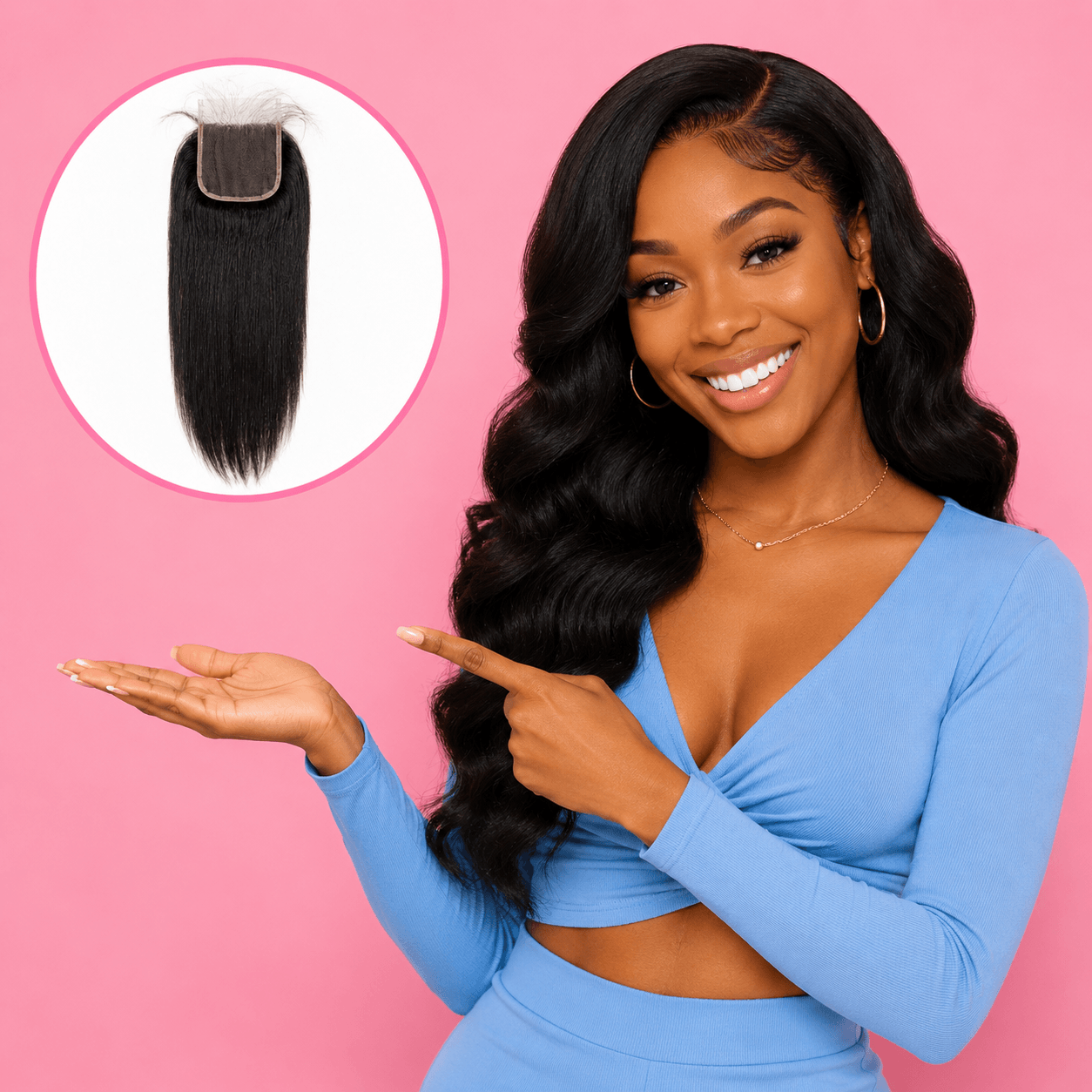
Hair loss can be a devastating experience for any woman. Not only does it affect your physical appearance, but it can also lead to a loss of self-confidence. While there are many causes of hair loss, the most common is genetics. If you have female pattern baldness, you may have inherited it from your mother or grandmother. Other common causes of hair loss include thyroid disease, anemia, stress, and nutritional deficiencies.
While there are many options available for treating hair loss, such as medications and surgery, not all women are candidates for these treatments. Lace closures and frontals offer a more affordable and less invasive option for women who are losing their hair.
A lace closure is a piece of lace or other material that is used to cover the scalp. A frontal is a strip of lace or material that covers the front part of the head. Both lace closures and frontals are usually made with human hair so they blend in seamlessly with your own hair.
Closures and frontals can be worn on their own or as part of a wig. Wigs offer the most natural-looking option for women who are experiencing hair loss. However, they can be expensive and require regular maintenance. Closures and frontals provide an affordable alternative that still allows you to achieve a natural look.
A lace closure or frontal can be a great option for women who are experiencing hair loss. They offer many benefits and can help you achieve the appearance of a full head of hair. When choosing a lace closure or frontal, be sure to keep your specific needs in mind and choose one that closely resembles your hair color, texture, and length.
The Wealthy Hair Quality Standard
At Wealthy Hair, we ensure the highest standards of sourcing, quality control, and ethical practices. Our human hair is sourced from trusted suppliers, with integrity maintained throughout the process to guarantee a long-lasting, high-quality product. We only use the finest materials, including Swiss lace and transparent lace, for our wigs, ensuring that each wig provides a flawless, natural look.
FAQ On Lace Frontals And Closures
What is lace frontal and closure?
Lace frontals are hair extensions made of lace that cover the front part of the head. Lace frontals cover the entire front hairline, while closures are small pieces of hair that are used to cover up the area where your extensions will be attached.
Why use Lace Frontals?
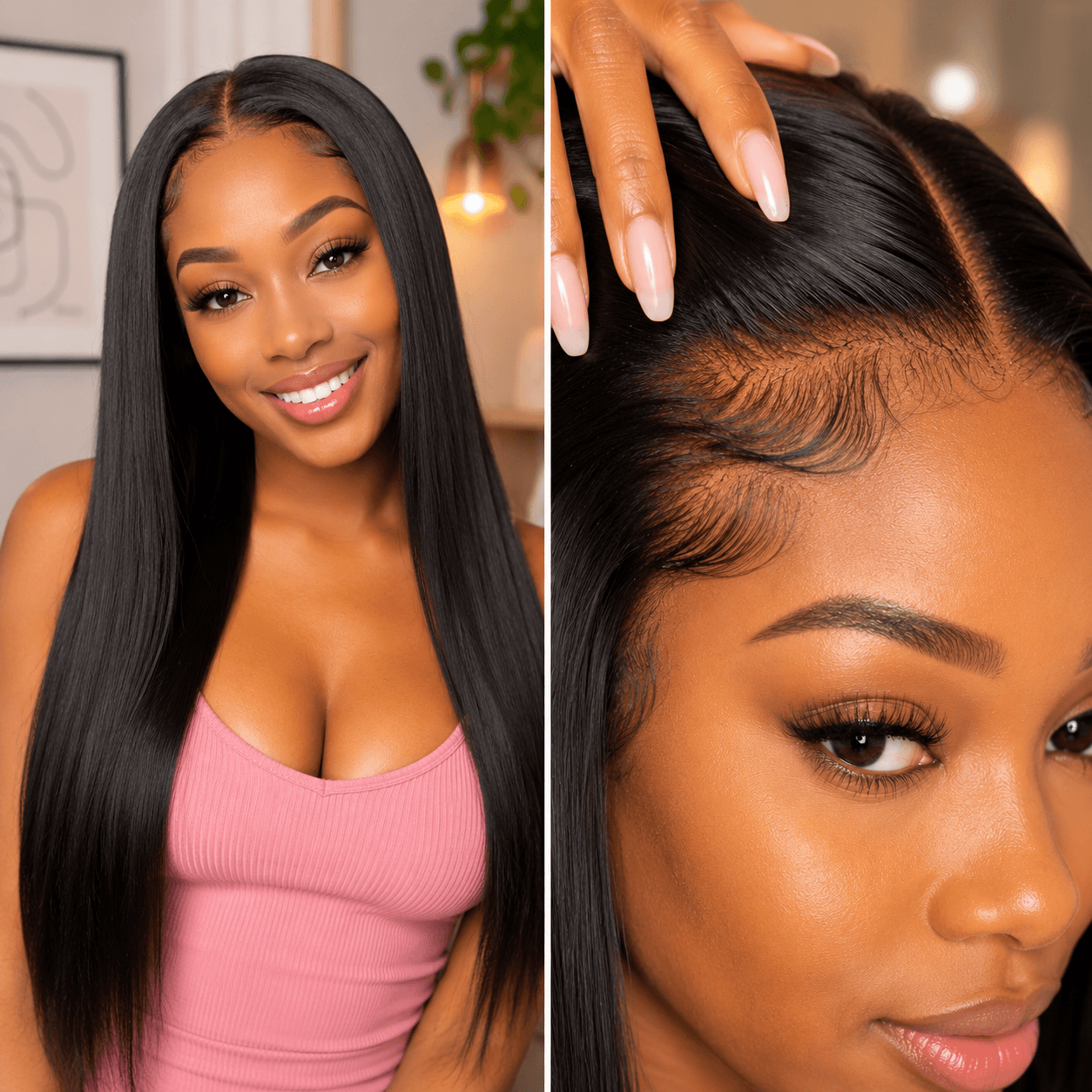
A lace frontal is a great option if you want to protect your natural hair while still getting the fullness and length that you desire. Hair frontals are usually made from 100% human hair, which means that they can be styled just like your own natural hair.
How Do I choose the right type of lace frontals?
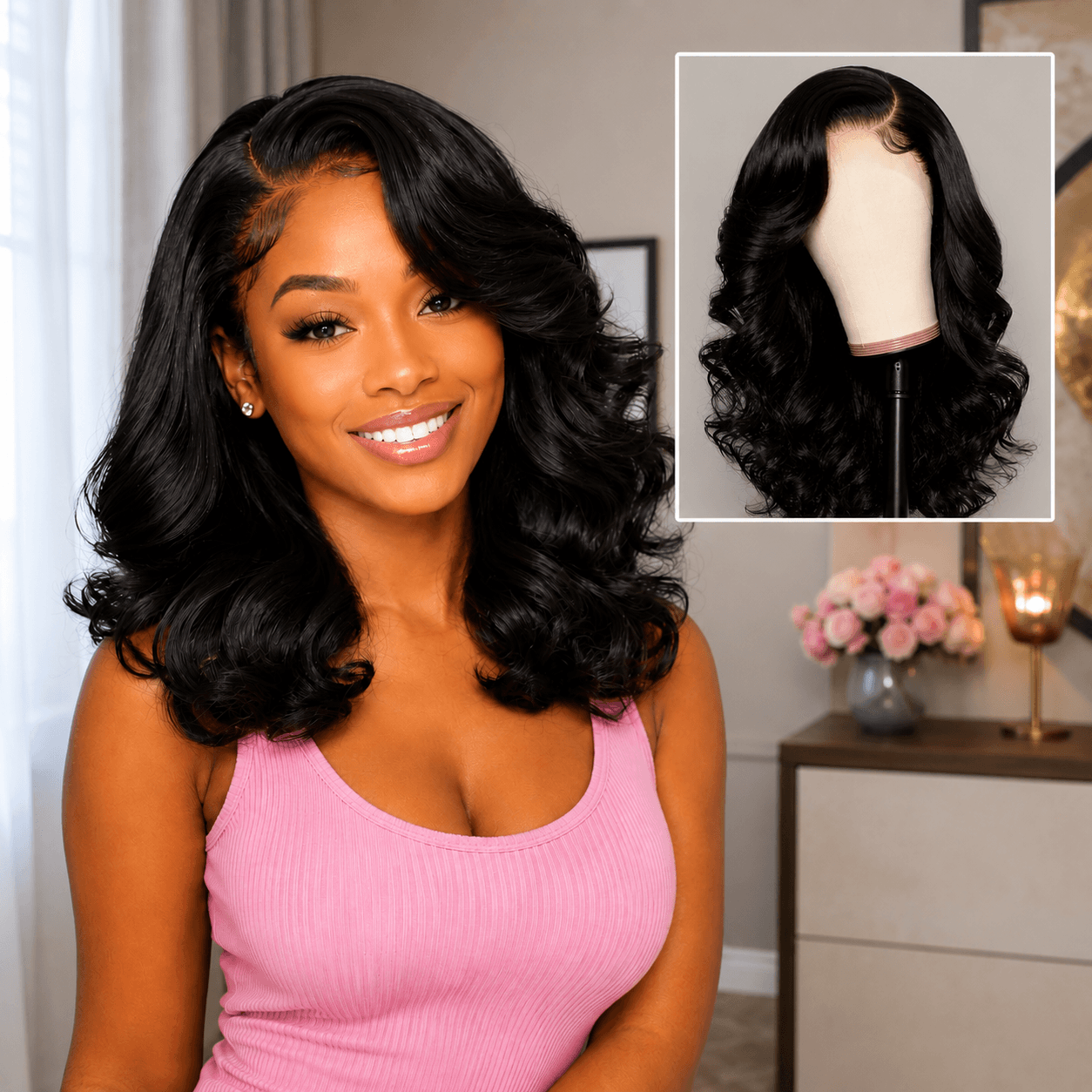
If you’re thinking about getting hair frontal, it’s important to find one that matches your natural hair color and texture. You should also make sure that the lace on the frontal matches your skin tone.
What are deep-wave lace frontals?
Deep-wave lace frontals are made with a deep-wave pattern. This gives the hair a natural wave that can be styled in any number of ways. The deep-wave pattern is also less likely to frizz in humid weather, making it a great option for summertime wear.
Where can I buy lace frontals?
You can buy lace frontal and lace closure from reputable online vendors. Wealthyhair.com is one of the top-selling brands for all kinds of hair, including lace frontal, body wave, natural hair, Indian hair, and Brazilian hair extensions.
Why are lace frontals more expensive than closures?
Lace frontals are typically more expensive than closures due to their larger size and greater versatility in styling. A lace frontal can cover a larger portion of the head, offering more flexibility in creating a variety of hairstyles, while closures, being smaller, are generally less expensive.
What is the standard size of a closure compared to a frontal?
The standard size for a closure is usually 4×4 inches, while lace frontals can range from 13 inches across and 4 inches back. This size difference plays a significant role in the cost and styling versatility of both closures and frontals.
Do closures require more hair bundles than frontals?
Closures generally require more hair bundles for installation due to their smaller size. In contrast, lace frontals, which cover a larger area, require fewer bundles, making them a more cost-effective option in terms of the number of bundles needed for a full install.
What styling options do closures offer compared to frontals?
Closures offer limited styling options, typically allowing for middle part, free part, or three-part styles. However, lace frontals offer more versatility, allowing you to create updos, ponytails, and other creative styles due to their larger coverage area.
Are closures easier to maintain than lace frontals?
Closures are considered beginner-friendly and generally require less maintenance than lace frontals. Lace frontals often require adhesives like glue or tape for installation and daily blending, making them more high-maintenance compared to closures, which need minimal daily upkeep.
How long do lace frontal installations last compared to closures?
Lace frontal installations can last anywhere from 2 to 4 weeks, depending on maintenance and care. Closures tend to last a bit longer with proper care, offering a more convenient solution for those looking for a low-maintenance style.
How do closures help protect natural hair?
Closures are a great option for protecting natural hair, as they eliminate the need for leave-out, reducing the tension on the edges and preventing damage to your natural scalp. Both closures and frontals create a natural-looking hairline, but closures may offer a gentler option for long-term wear.
What is the difference in appearance between lace frontals and closures?
Both closures and lace frontals are designed to create a natural-looking hairline, but lace frontals provide a more seamless, undetectable blend by offering a larger coverage area. Silk closures can add an extra layer of luxury by mimicking the natural shine and texture of the scalp, while frontals allow for more creative styling options.
Getting set to buy your lace frontals and closures to give your natural hairline a break? Head over to Top Expert Tips For A 13×4 Lace Front Wig for more information on choosing the right 13×4 lace front wig.
After choosing the right 13×4 lace frontal, it’s important to know how to install them properly. You can learn how to install and maintain them here: 13×4 Lace Frontal Complete Step-By-Step Guide.

